How do I place a pedestal (with a statue)?
A pedestal is the perfect way to give extra attention to a statue. It is not only important to place the pedestal securely, but also to attach the statue correctly and safely to the pedestal. If you do this incorrectly, it can lead to instability or even damage.
You can attach a statue to a pedestal in various ways, such as by drilling or gluing. If you'd rather not do this yourself, you can also hire a professional to help you.
In this blog, you will discover how to set a pedestal firmly and safely, how to attach a statue to it, and the best ways to maintain the pedestal.
Summary
- A pedestal is a beautiful and stylish way to make art, plants, or other decorative objects stand out. You can use a pedestal both indoors and outdoors.
- It is important that you place the pedestal on a stable and level surface. This ensures that it stands stable and safe.
- You can attach statues to a pedestal by drilling, gluing, or hiring a professional.
What is a pedestal exactly?
A pedestal is a column on which you can place an object, such as a plant or artwork. This makes the object stand out better and receive more attention. You can use a pedestal both indoors and outdoors.
At MySteel, you can find corten steel pedestals. This durable material can withstand various weather conditions. Therefore, you can leave the pedestal outside in any season without needing to cover it.
Using corten steel indoors
Did you know that a corten steel pedestal can also be used indoors? Discover how and what to pay attention to in our 'corten steel indoors' blog.
What can you use a pedestal for in your garden?
A pedestal is ideal for giving a work of art or plant a beautiful place, but you can also place other elements on it, such as a vase.
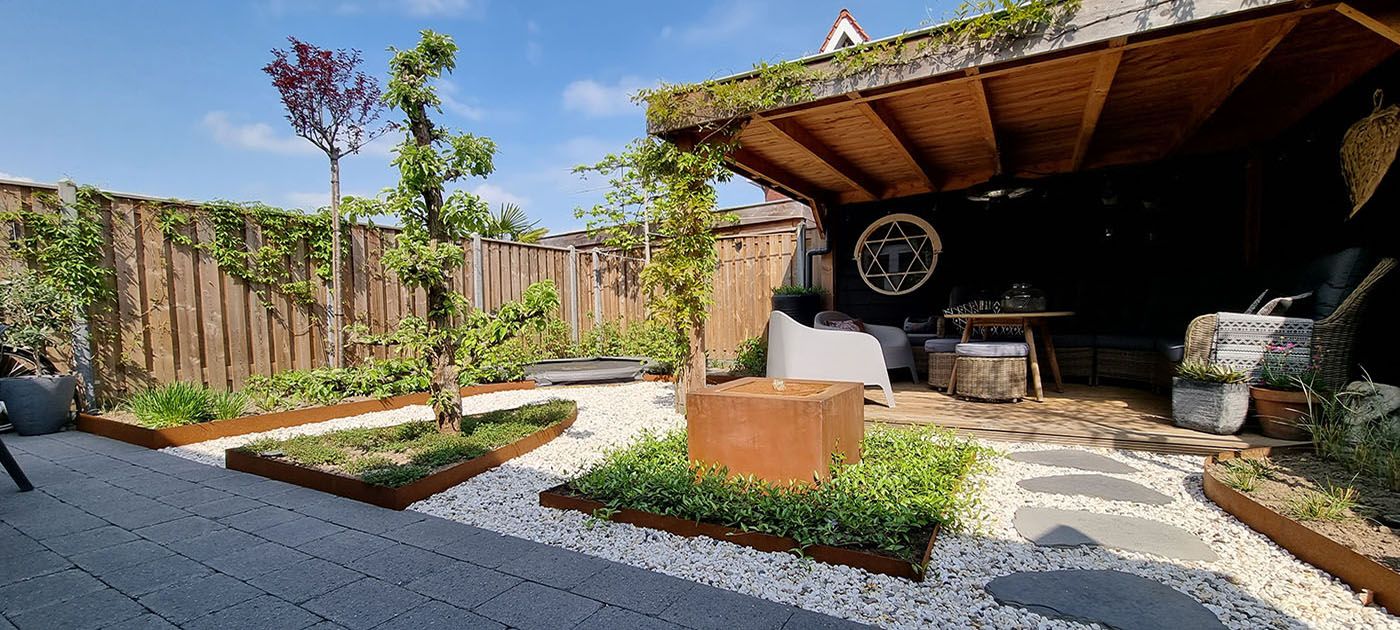
The corten steel pedestals from MySteel provide a stylish and timeless look. This makes them fit well in your garden, but also in a gallery or public space.
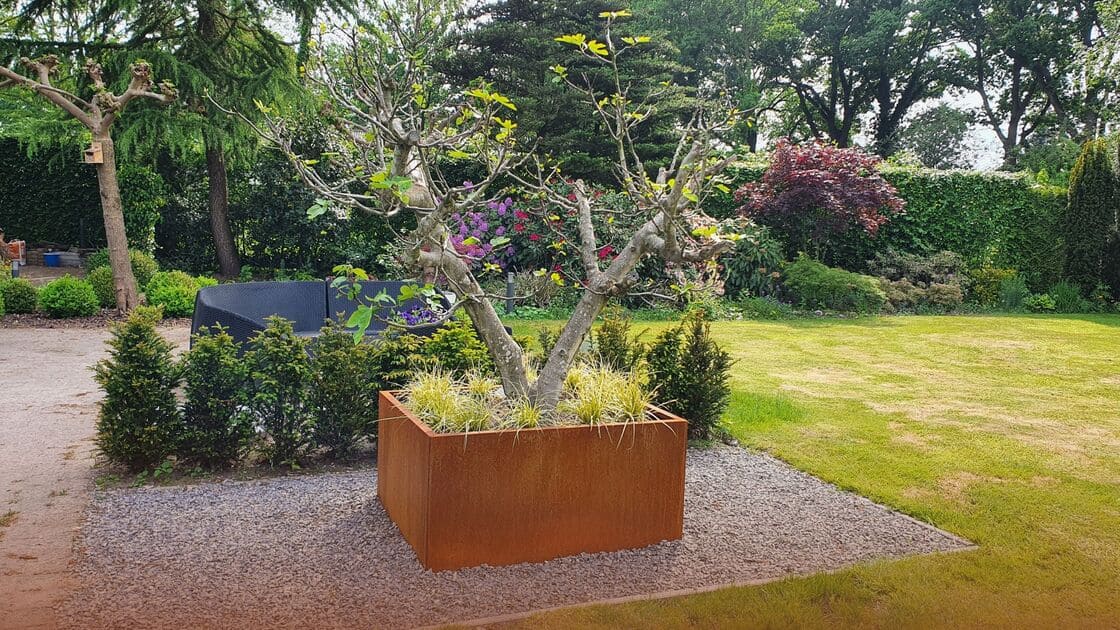
You can use a corten steel pedestal in many ways:
- As a base for fire bowls
- As a display element for artworks
- As a pillar for vases or plant pots
- As a column on which you can place a house number
- As a side table or standing table
- As a focal point in your garden or patio
How do you best place a pedestal?
For safety and stability, it is important to place the pedestal securely and correctly. Below, we explain step by step how to best tackle this:
- Ensure a level, stable surface
A pedestal should always stand on a level and stable surface. If not, stresses can arise in the pedestal, which can ultimately lead to damage to the product. - Check if the pedestal is stable
After placing, test whether the pedestal is stable by checking if it wobbles or is uneven. - Stabilize the pedestal
Use filler material, such as rubber pads or wooden wedges, to level the surface and stabilize the pedestal.
Placement indoors or outdoors
A corten steel pedestal can be placed both indoors and outdoors. If you want to use the pedestal indoors, for example in your living room, keep a few things in mind.
For example, the corten steel must first be fully rusted before you can place the pedestal indoors. This is because corten steel rusts better when it is outside and is exposed to moisture and temperature differences. Only when the pedestal has the desired color, can you set it up indoors.
The pedestal also serves as a handy tool to hide unsightly elements, such as cables, pipes, or small damages.
How do you attach a statue to a pedestal?
Do you want to place a statue on a pedestal? You have different options:
Note
Please note that the warranty of MySteel products will be void if you modify them yourself.
Drilling
The first way to place a statue on a pedestal is by drilling. Below, you can read step by step how to do that:
- Mark the position: Place the statue on the pedestal and mark exactly where you want to place the fasteners. Ensure that the holes are evenly spaced so that the statue remains stable.
- Drill holes in the pedestal: Use a regular cordless drill and a standard metal drill bit to drill the holes at the marked spots. Make sure the holes are large enough for the bolts or screws you will use. We recommend drilling about 2 mm larger than the width of the bolt. If the bolt is, for example, 8 mm, then drill a hole of 10 mm.
- Drill holes in the statue: If you can drill the statue, first mark the correct spots on the bottom of the statue. Use a drill bit that is suitable for the material of the statue. Work slowly and carefully to avoid damaging the statue.
- Attach the statue with bolts or screws: Insert the bolts or screws through the holes in both the pedestal and the statue. Tighten them firmly, but do not apply too much force so you do not damage the statue. If you are using bolts, place rings or washers between the statue and the pedestal. This will help distribute the pressure and prevent damage.
Reading tip
Do you want more information about drilling corten steel? Read our blog ‘Processing corten steel like a pro’
Gluing
If you cannot drill into the statue or prefer not to use screws, you can also use a strong epoxy or construction adhesive to attach the statue to the pedestal. Follow these steps:
- Preparation: Clean both the top of the pedestal and the bottom of the statue to ensure they are free of dust and grease before applying the glue.
- Apply the glue: Apply an even layer of epoxy to the bottom of the statue and then carefully place it on the pedestal. Press it down firmly. Follow the instructions of the glue manufacturer and allow sufficient time for the glue to cure.
Can you also glue statues to rusted corten steel?
If the corten steel pedestal is rusted, then the material has a flaky surface which prevents proper adhesion of the glue. It is best to glue the statue to the pedestal when it is unrusted.
If it is already rusted, sand the corten steel first to remove the rust and make the surface rough. This will allow the glue to adhere better, keeping the statue more securely on the pedestal.
Professional help
If you find it difficult to securely attach the statue to the pedestal, you can also hire a professional company to assist you.
How do you best maintain your pedestal?
Thanks to the natural rust layer, corten steel requires little maintenance. This layer not only gives corten steel its typical appearance but also protects against further rust formation. Therefore, you do not need to treat the pedestal itself.
However, it is important to regularly clean the pedestal to maintain its lifespan and appearance. Remove green deposits, garden debris, and other dirt, then clean with lukewarm water and a soft brush. Do not use chemical cleaning agents.
The steel pedestals from MySteel
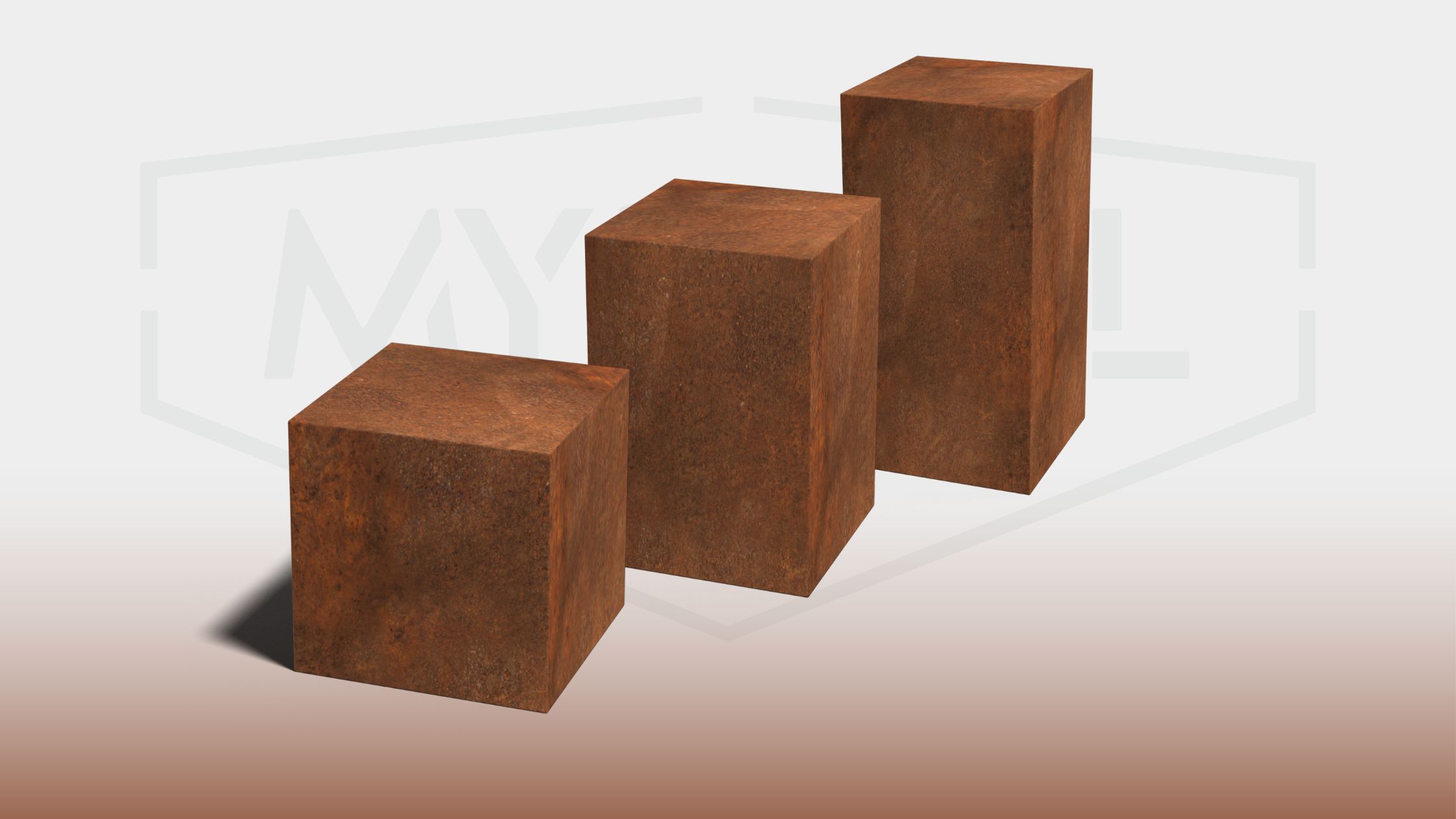
At MySteel, you will find pedestals in various sizes. You can choose from:
- 30 x 30 cm: available in heights of 40, 60, 80, and 100 cm.
- 40 x 40 cm: available in heights of 40, 60, 80, and 100 cm.
All pedestals are square, not solid, and made from 2 mm thick corten steel. The craftsmen at MySteel make all the pedestals themselves. Therefore, you can count on fast delivery and direct communication.
Do you have specific requirements? Then you can also have a corten steel pedestal completely custom-made. Contact us for more information!
Conclusion
With a pedestal, you can make a piece of art, a plant, or another decorative object stand out extra. By setting the pedestal firmly, you give the object a stable and safe base. You can then place a statue on the pedestal in various ways: by drilling, gluing, or by enlisting professional help.
The corten steel pedestals from MySteel not only look good but also last a long time. They require little maintenance, are resistant to all weather conditions, and can be used both indoors and outdoors. Curious about which pedestal fits your home or garden? Check out our extensive range in the webshop or contact us for a custom pedestal.