How do you install a steel garden staircase?
A garden staircase is not only useful for bridging height differences in your garden, but it also adds an extra detail to your garden. It is important that you install the staircase correctly to avoid issues such as damage and instability. In this blog, we will explain step by step how to install a steel staircase yourself, so you can get started with confidence.
Summary
- A steel garden staircase can be easily installed by yourself.
- Choose a suitable location for the staircase: ensure a stable surface, good accessibility, and remove obstacles for safety.
- Use the right tools to secure the staircase firmly.
- You can apply a non-slip surface yourself for extra safety, especially in wet conditions.
Can you install a steel staircase yourself or do you need professional help?
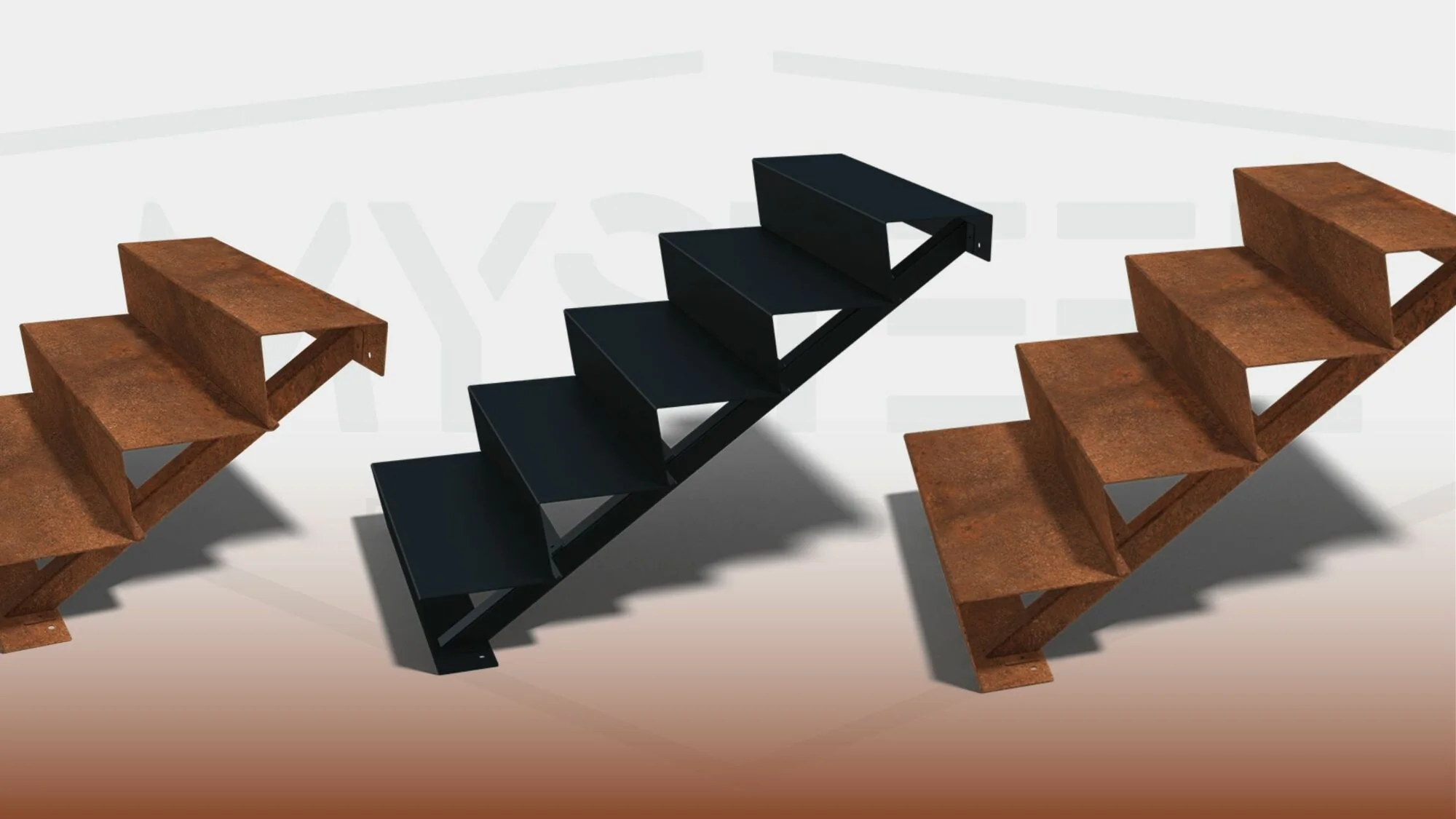
Yes, you can easily install a garden staircase yourself. The steel staircases from MySteel are modular and come with clear instructions.
Although professional help is not necessary, it can be handy to have someone assist you, especially with larger staircases.
How do you assemble a steel staircase?
Good preparation is important. Therefore, remove the steel staircase from the packaging immediately upon receipt to prevent any stains. Also, keep in mind that this staircase cannot be installed without additional support. You can place the staircase on a slope or against a wall.
Below, we explain step by step what tools you need, the best place to place the staircase, and how to ensure a stable surface and secure attachment of the staircase.
What tools do you need?
To install a steel garden staircase, you need the right tools. What you need depends on where and how you are placing the staircase, such as on a slope or against a wall.
Here is an overview of the basic materials:
- Level: This allows you to check whether the ground and the staircase itself are level. This is important for stability.
- Drill: To drill holes in the ground or wall so you can secure the staircase firmly.
- Wrench or spanner: To tighten bolts and other fastening materials.
- Strong fastening materials: Screws, bolts or anchors, depending on the ground or wall to which you attach the staircase.
- Shovel: Use a shovel if you need to adjust the ground. For example, to level the ground or to reinforce it with gravel.
What is the best place for a steel garden staircase?
If you choose an outdoor location to place your powder-coated staircase, you need to consider a few important factors:
Stable surface
The ground must be stable enough to support the staircase. This prevents your staircase from sinking after a while. You can read how to achieve this in the section ‘How do you ensure a stable surface when placing a garden staircase?’.
Accessibility
The staircase should logically connect the different levels or parts of your garden. Look at the most used paths in your garden and ensure the staircase is easily accessible.
Safety
Remove obstacles, such as low-hanging branches, bushes, or garden furniture that could block access to the staircase. Secure the staircase well, so it stays firmly in place and does not move.
Aesthetics
A staircase should not only be practical but also fit beautifully with the rest of your garden. So make sure the location of the staircase aligns with the style and appearance of your garden. Consider the spot from different angles to get a good idea of how your staircase would look.
How do you ensure a stable surface when placing a garden staircase?
A solid base is important for the safety and longevity of your garden staircase. Below we explain how to lay a stable foundation so you can prevent damage and accidents:
Make the surface level
Use a level and a shovel to make the surface completely even. Are you placing the staircase on a slope? Then you need to level that slope as well.
Reinforce the surface
If the ground is not sturdy enough, you can reinforce it with a layer of gravel or sand. This provides additional stability and prevents the staircase from shifting or sinking.
Check with a level
When you're done, use a level to check if the surface is truly level.
How do you secure your steel staircase properly and safely?
Properly and safely securing your steel staircase is very important for safety and stability. Follow the steps below to ensure the staircase remains stable:
Choose the right fastening materials
You can secure the staircase with screws, bolts, or anchors, depending on the wall or ground (such as concrete, masonry, or wood).
Use a drill
Use a drill to make the holes. Ensure that the holes have the correct diameter and depth for the fastening materials, so the screws or bolts fit well and are secure.
Install the fastening materials
If extra stability is needed, you can use plugs or anchors. Tighten the screws or bolts firmly and check if they are secure and do not move.
Check stability
Once the staircase is secured, it’s important to test its stability. Walk up and down the staircase a few times and see if it is stable. If you notice that the staircase moves or wobbles, check the fastening points and tighten them if necessary.
Can you apply a non-slip surface to your steel staircase yourself?
Yes, you can easily apply a non-slip surface to a steel staircase to prevent slipping, especially in wet conditions. There are different ways to do this:
- Non-slip tape
- Non-slip coating or paint
For a corten steel garden staircase, a non-slip surface is often less necessary. This is because the material already has a rough texture that provides non-slip properties.
How do you determine the ideal height and width for your garden staircase?
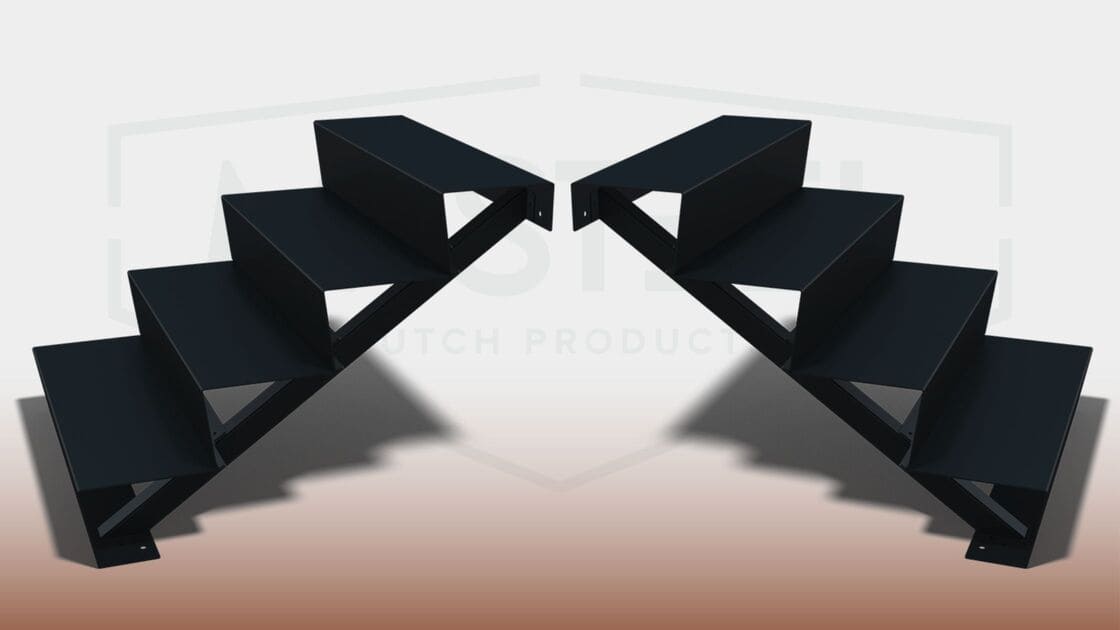
The staircases from MySteel are available in various widths and heights. Each step has a standard height of 17 cm.
- Width:
- 80 cm
- 100 cm
- 120 cm
- Height:
- 2 steps
- 3 steps
- 4 steps
- 5 steps
The ideal height and number of steps depend on the distance you need to bridge between the different levels in your garden. For example, if you have a height difference of 68 cm, you will need a staircase with four steps.
You choose the width of the staircase based on the available space you have and how large you want the staircase to be.
Conclusion
If you work carefully and make the right preparations, you can install a steel garden staircase yourself. Choose a good location for the staircase, ensure that the base is sturdy, and secure the staircase well. If you need more grip, you can add a non-slip surface to your garden staircase. The staircases from MySteel come in different heights and widths, so there is always a staircase that perfectly fits your garden.