Olive Tree in a Large Pot: Choosing the Right Pot and Care Tips
An olive tree in a pot is a beautiful addition to your outdoor space, whether it's a terrace, garden, or balcony. It creates a cozy, Mediterranean atmosphere that evokes memories of sunny vacations. However, choosing the right planter is very important for the health and growth of your tree. The right pot ensures that your olive tree has enough space to grow well and healthily.
In this article, we help you choose the best planter to place your olive tree outside and provide care tips. This way, you can enjoy this beautiful tree for as long as possible.
Summary
- Choose a planter that is large enough to allow the roots room to grow.
- Use well-draining, sandy loam soil to ensure the roots do not remain too wet.
- It is important to fertilize and water your olive tree regularly.
- Protect your olive tree from the cold in winter and provide enough water in summer.
Which Large Flower Pot or Planter Can Be Used for an Olive Tree Outside?
If you're looking for a planter for an olive tree, you have a choice of different materials, such as steel, terracotta, plastic, and wood. But which planter is best for your olive tree? Each material has specific properties. Below, we discuss some advantages and disadvantages:
|
|
Steel | Terracotta | Plastic | Wood |
| Advantages | Provides good stability, prevents the tree from falling over |
Natural appearance | Lightweight and easy to move | Warm appearance |
Can carry the weight of the tree and soil well |
Good air circulation and drainage for the roots | Inexpensive | Good insulation properties | |
| Disadvantages | Heavy and thus less easy to move |
Can break in freezing weather | Can warp and discolor in direct sunlight | Needs regular maintenance |
Can rust if not properly treated. Cor-ten steel and powder-coated steel do not have this issue. |
The color may fade | Holds water longer, which can lead to poor drainage | Can rot if not well maintained |
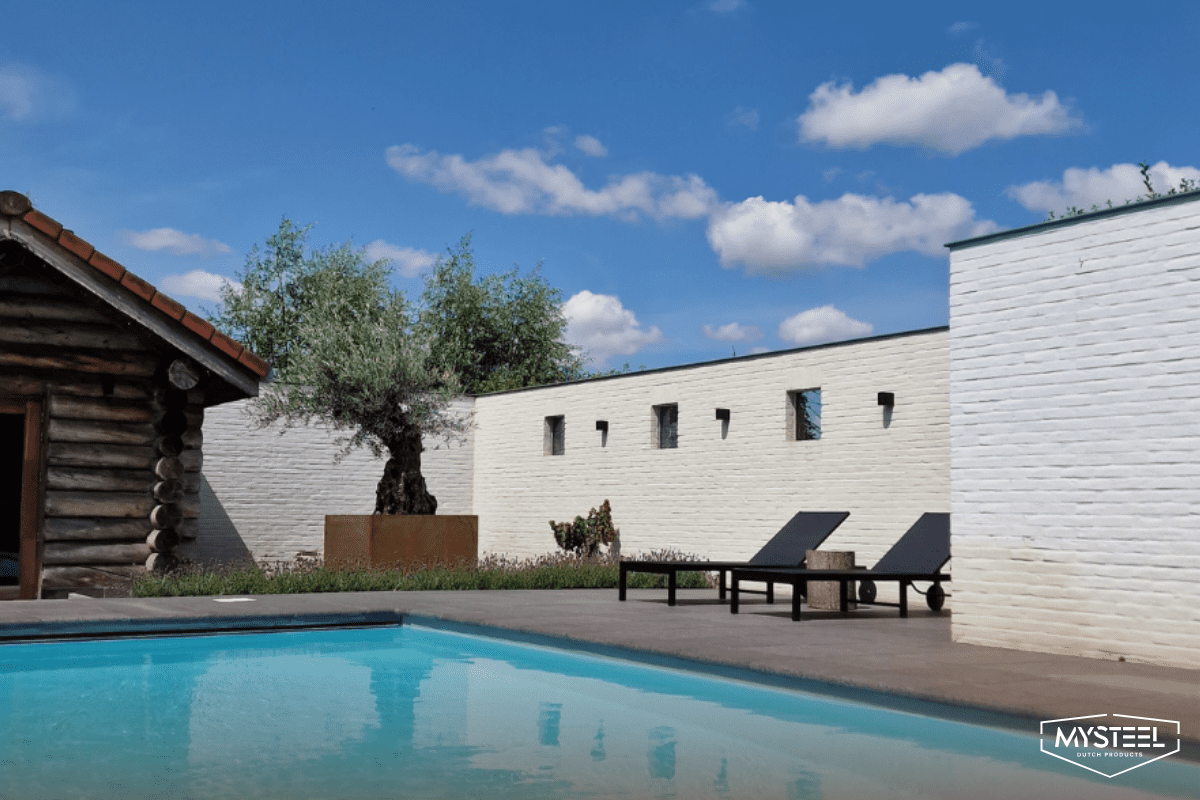
Because steel is more stable and durable than many other materials, steel planters are perfect for heavier plants such as olive trees. At MySteel, you can choose from a wide range of powder-coated steel planters and corten steel planters.
How Big Should the Planter for an Olive Tree Be?
The size of the planter is important to give the roots of your tree enough space. How large the pot needs to be depends on the size of your olive tree. Below we provide an overview of the minimum height and diameter of the planter so that the roots can grow well:
|
Olive Tree |
Length x Width | Height | Volume |
| Small Olive Tree (up to 1 m) |
30 x 30 cm 40 x 40 cm |
30-40 cm | 25-30 liters |
| Medium Olive Tree (1-1.5 m) |
40 x 40 cm 50 x 50 cm |
40-50 cm | 50-60 liters |
| Large Olive Tree (1.5-2 m) |
60 x 60 cm | 50-60 cm | 80-100 liters |
| Very Large Olive Tree (more than 2 m) |
80 x 80 cm 100 x 100 cm |
60-80 cm | 120-150 liters |
How Fast Does an Olive Tree Grow in a Pot?
How fast an olive tree grows in a pot depends on several factors, such as the quality of the potting soil, the amount of sunlight and water, and how well you take care of your tree.
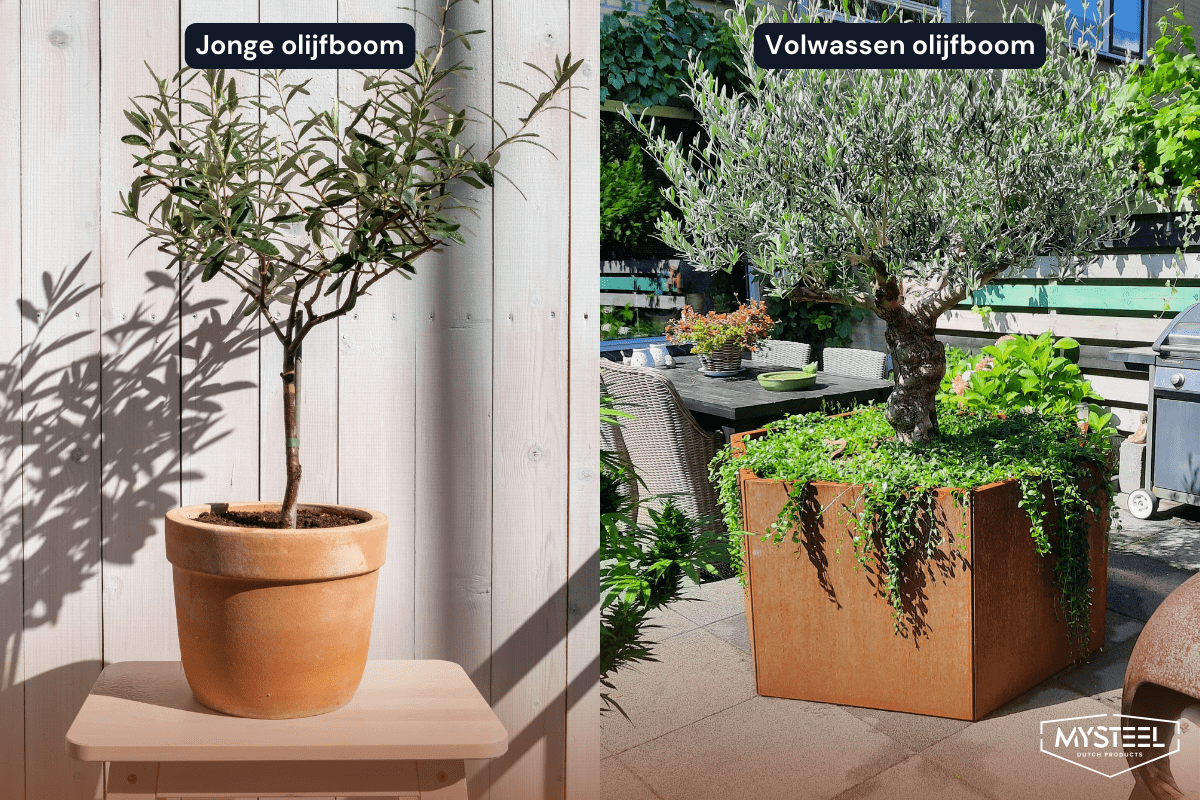
One of the main factors affecting growth is the size of the pot. A pot that is too small can restrict root growth. Therefore, it is important to closely monitor the growth of the olive tree and repot it in a larger pot if necessary. Keep in mind that young and mature olive trees grow differently:
Young Olive Trees (1-3 years old)
Young olive trees are in the growth phase and can grow 30-60 centimeters each year in ideal conditions. When a young olive tree is placed in a pot that is too small, it will outgrow the pot after a few years. It’s important to monitor the growth closely and provide a larger pot in time. This way your tree can develop healthily.
Mature Olive Trees (4 years and older)
As the tree ages, it grows slower. The average annual growth then ranges from 10-20 centimeters. Mature olive trees need to be repotted less often, but it remains important to check the pot regularly.
How Can You Best Care for an Olive Tree in a Pot?
Proper care for your olive tree in a pot is important for its health and growth. Below, we discuss some things to look out for:
What Potting Soil Should You Use for an Olive Tree?
For an olive tree, you need well-draining, sandy loam soil. This type of soil ensures that excess water can easily drain away, preventing the ground from becoming too wet. A too wet or compacted soil can hinder the growth of the olive tree.
The main properties of potting soil for an olive tree are:
- Good drainage: Olive trees do not like wet roots.
- Airiness: The roots of the olive tree must be able to absorb enough oxygen. A loose structure of the potting soil aids in healthy root development.
- Nutrient-rich: The olive tree needs nutrients to grow well.
“Young olive trees grow faster than mature olive trees. Keep this in mind when selecting your planter. Otherwise, you risk having to purchase a new, larger planter within a year.”
How Often Should You Fertilize the Olive Tree in the Planter?
Fertilizing your olive tree in a pot with a balanced fertilizer can stimulate growth. Olive trees primarily require nitrogen, phosphorus, and potassium. They do not need the same amount of nutrients at all times of the year, so a clear fertilization schedule can help:
- Spring (March - May): This is the start of the growing season when the olive tree actively begins to form new leaves and branches. During this period, provide a balanced fertilizer (NPK 10-10-10) that releases nutrients slowly every 4-6 weeks.
- Summer (June - August): In the peak growth season, continue fertilizing the tree every 4-6 weeks with a liquid fertilizer or a balanced granular form.
- Autumn (September - November): At the end of the growing season, it is important to adjust the fertilization to prepare the tree for the dormant period. Fertilize the tree once in September and again in November, using a fertilizer with a lower nitrogen content (NPK 5-10-10).
- Winter (December - February): In winter, the olive tree enters a dormant period. This means that your tree does not need additional nutrients. Therefore, you do not need to fertilize during this time.
What does ‘NPK’ stand for in fertilizer?
NPK is an abbreviation for the components in the fertilizer. N stands for nitrogen (also known as Nitrogen in English), P stands for phosphate (or Phosphate), and K stands for potassium.
How Much and How Often Should You Water an Olive Tree in a Pot?
An olive tree in a pot needs a good water balance. Especially in the first years, you need to water the tree regularly. Water your plant two to three times a week in summer. In winter, watering less frequently is sufficient. Ensure that the soil remains moist but not soggy.
Good drainage is crucial here to prevent root rot, as overly wet soil is harmful to the roots. The bottom plates of the steel planters from MySteel have drainage holes that allow excess water to escape easily.
For the health of your olive tree, it is important to avoid both too much and too little water. Both situations can be harmful:
Too Much Water
An olive tree in a pot may suddenly develop yellow leaves. This is often a sign that your tree is getting too much water. It usually starts with the older leaves at the bottom of the tree. Green leaves of the tree may also fall off in response to root stress.
Too Little Water
If an olive tree receives too little water, the leaves show other symptoms. They become wilted, dry, and brittle, curl, and the edges may turn brown. Eventually, these dry leaves may fall off the tree.
By regularly checking whether the soil is moist enough, you can adjust the amount of water you give. This way, your olive tree remains healthy.
How to Care for the Olive Tree in Winter and Summer?
Caring for an olive tree in a pot requires special attention in winter and summer. Here are some tips for caring for your olive tree in the different seasons:
Winter
In winter, the olive tree needs specific care to stay healthy:
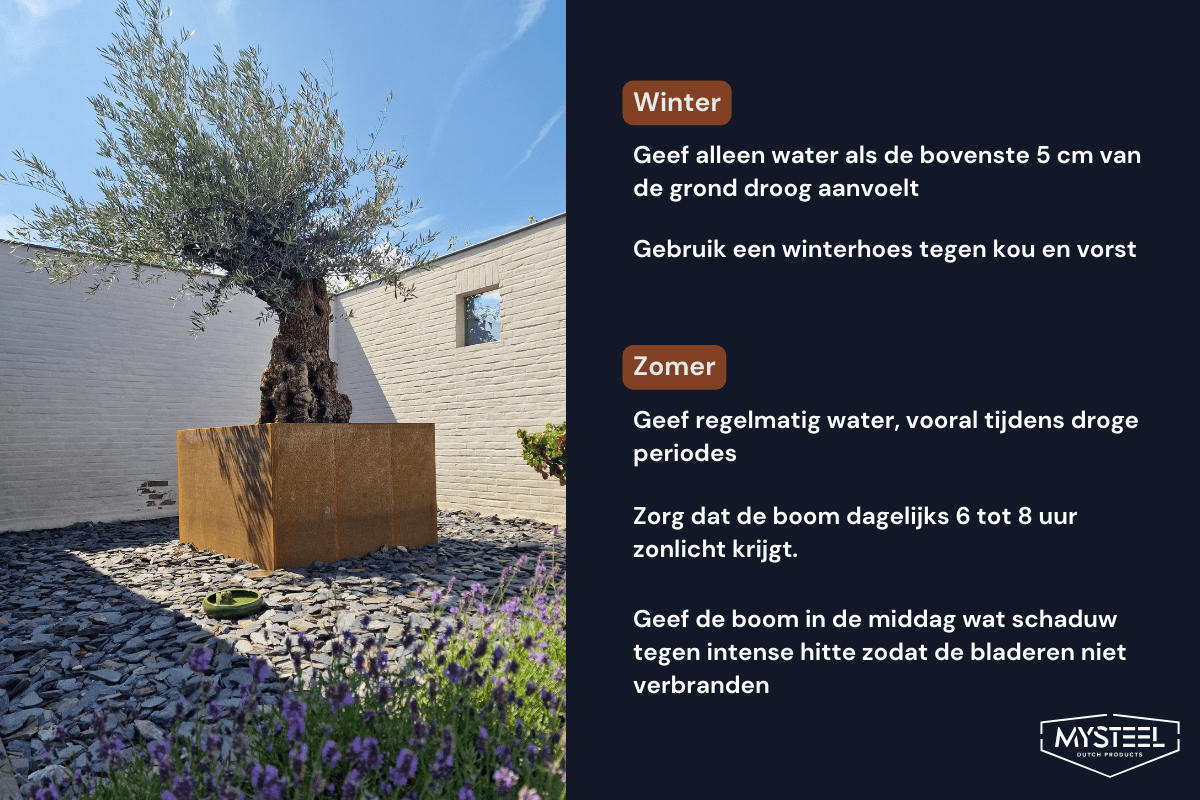
- Water: Only water when the top 5 cm of soil feels dry to prevent root rot.
- Frost: Use a winter cover to protect your olive tree in the planter from the cold and frost, but ensure the tree still gets enough light.
Summer
In summer, the olive tree has different care needs:
- Water: Water regularly, especially during dry periods. Allow the top 2-3 cm of soil to dry between watering.
- Sunlight: It is important to carefully consider the location of your olive tree in the pot. Ensure that the tree gets 6 to 8 hours of sunlight daily.
- Shade: In extreme heat, it's wise to provide some shade for the tree in the afternoon to prevent the leaves from burning.
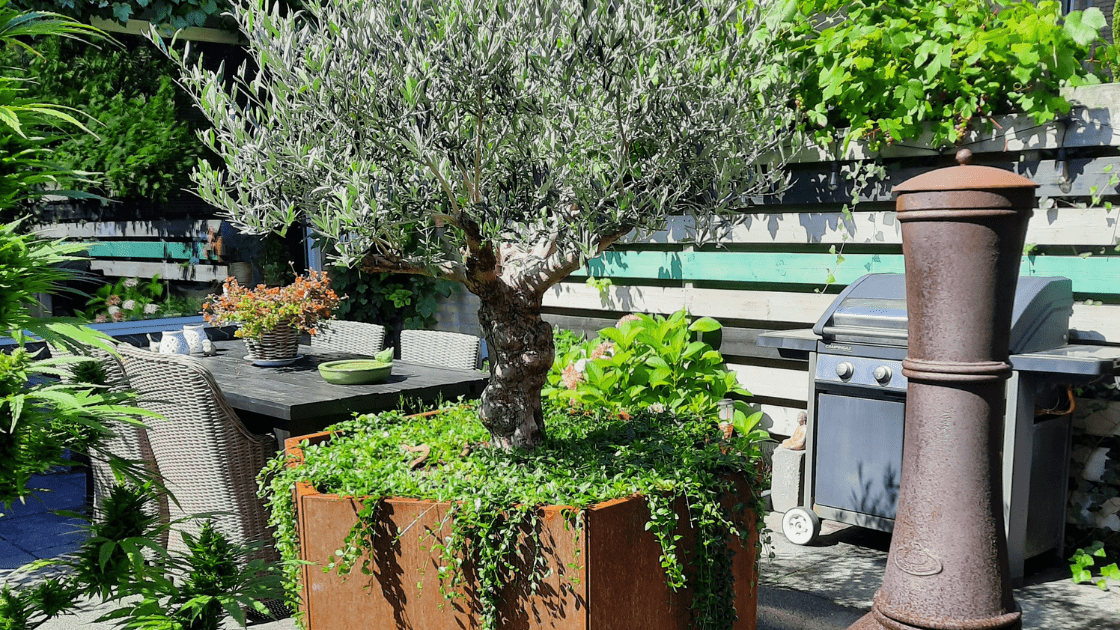
Whether you have a large terrace, a small balcony, or a spacious garden, there are many ways to use olive trees in steel planters. On terraces, they can provide shade and privacy or separate different areas of your terrace. On balconies, they fit well in corners or along the fence. In gardens, the steel planters can line pathways or serve as beautiful accents among the flowers.
Also interesting:
Curious about how to decorate your balcony, small garden, or front yard alongside a planter with an olive tree? Check out the following blogs:
Conclusion
An olive tree can grow well in a large pot or planter. This makes the tree a good choice for both large gardens and smaller outdoor spaces like balconies and terraces. By properly caring for your olive tree, with regular watering, the right potting soil, and proper fertilization, your olive tree can grow well and remain healthy.
Start planting and caring for your olive tree yourself. It’s fun to do, and you’ll see your tree grow each year. This not only gives a good feeling but also makes your surroundings greener and more beautiful. Enjoy gardening and the beautiful results!