Can corten steel withstand water?
Corten steel is popular in garden design due to its durability, appearance, and resistance to corrosion. The material can withstand various weather conditions, making it an attractive choice for many garden owners.
However, when using corten steel in your garden, it’s important to understand how the material reacts to water. Corten steel generally performs well in humid environments and even requires oxygen to develop its characteristic brown rust color. But what happens when corten steel is submerged underwater for a long time, for instance, due to clogged drainage holes in planters?
Summary
- Corten steel cannot rust through with constant exposure to water.
- If corten steel remains underwater for an extended period, an additional rust layer can form beneath the original rust layer.
- This additional rust layer can be removed by yourself, or you can let the natural process take its course.
Rust process underwater
When corten steel remains underwater for an extended period, the rust layer can detach and may eventually fall off the product. A new rust layer forms underneath the original rust layer.
This process can be confusing for many people, as it appears that the material is rusting through. But don’t worry, that is not the case. Corten steel does not rust through like traditional steel types do.
Recommended Read
Want to know how the rust layer of corten steel actually forms? Then read more in our blog about the rust process of corten steel!

Highlighted
Can corten steel rust through with constant water exposure?
No, corten steel cannot rust through. While it may be in constant contact with water, an additional rust layer can develop beneath the original rust layer. This can lead people to believe that the material is rusting through. However, you can easily remove this layer, and the material still retains its durability and appearance.
What can you do if the rust layer of corten steel detaches?
If the rust layer of corten steel detaches due to constant exposure to water, you have two options for maintenance. You can:
- remove the rust layer yourself
- let it take its natural course
Below, you can read more about each option.
Solution 1: Remove the rust layer yourself
You can choose to remove the old rust layer and lightly sand the surface. This allows the material to rust properly again. In this way, you also speed up the rusting process and give the corten steel a more uniform appearance.
Solution 2: Let it take its natural course
Another option is to simply let the natural process take its course. The old rust layer will eventually loosen on its own, and a new rust layer will form. This process may take longer since it depends on various factors such as the weather. The result is more natural but can be less uniform.
Recommended Read
Want to know how to best maintain corten steel products? Read more in our blog about the maintenance of corten steel.
Causes of constant submersion
But why are some corten steel products always submerged in water? It's essential to understand what the causes are and what you can do to avoid this. Therefore, we will discuss some reasons below and provide suggestions for possible solutions:
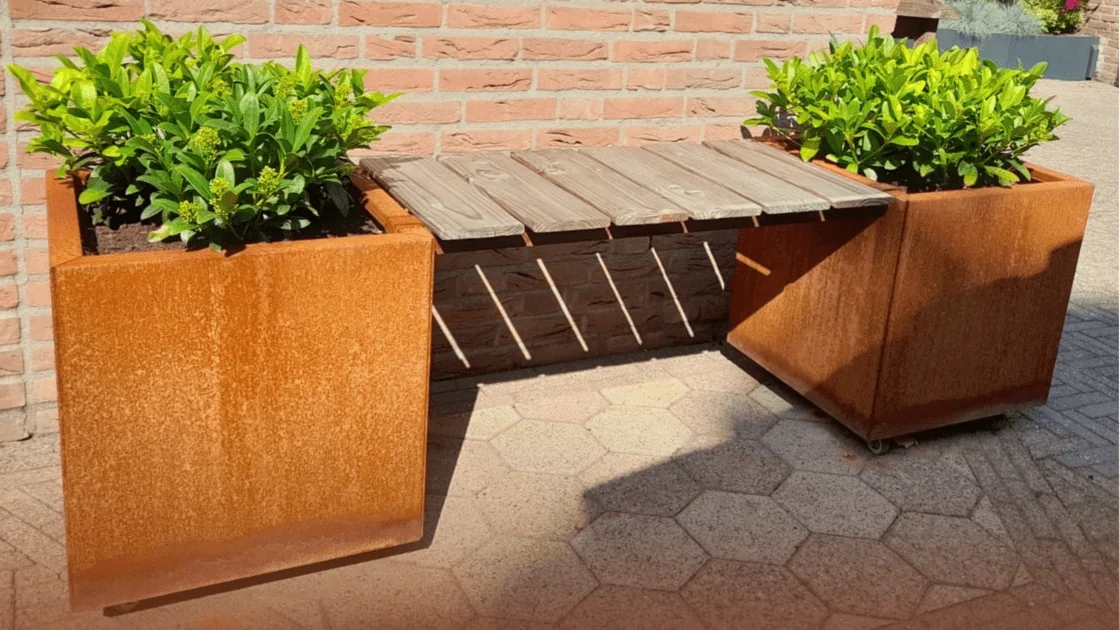
Example 1: The planter is on tiles or stones that block the drainage holes
When a corten steel planter is placed on tiles or stones that block the drainage holes, water cannot drain away and stays in the planter. The corten steel remains in contact with water at all times.
Example 2: The planter is on very hard ground that does not allow water to pass
On a surface that is too hard, such as bone-dry soil, water cannot drain away, even if the planter has sufficient drainage holes. Again, water remains in the planter, keeping the corten steel submerged.
Example 3: The ground under the planter is underwater
If the ground on which the planter sits is underwater, the water cannot drain away. This results in constant submersion of the corten steel, increasing the risk of corrosion.
Example 4: The drainage holes are clogged
In some cases, the drainage holes of the planter can become clogged by, for example, leaves or dirt.
Example 5: The planter is filled incorrectly
Improper filling of the planter, where the different layers of soil, fabric, and gravel are not properly applied, can block drainage. Water cannot penetrate through these layers effectively and remains in the planter.
It is therefore important to place corten steel products on a suitable substrate so that excess water can easily drain away. Additionally, the planter must also be able to easily dispose of excess water. The corten steel planters from MySteel are designed with sufficient drainage holes to make this possible. This ensures that water does not accumulate in the planters, and the corten steel does not remain in contact with water all the time.
What about corten steel water tables?
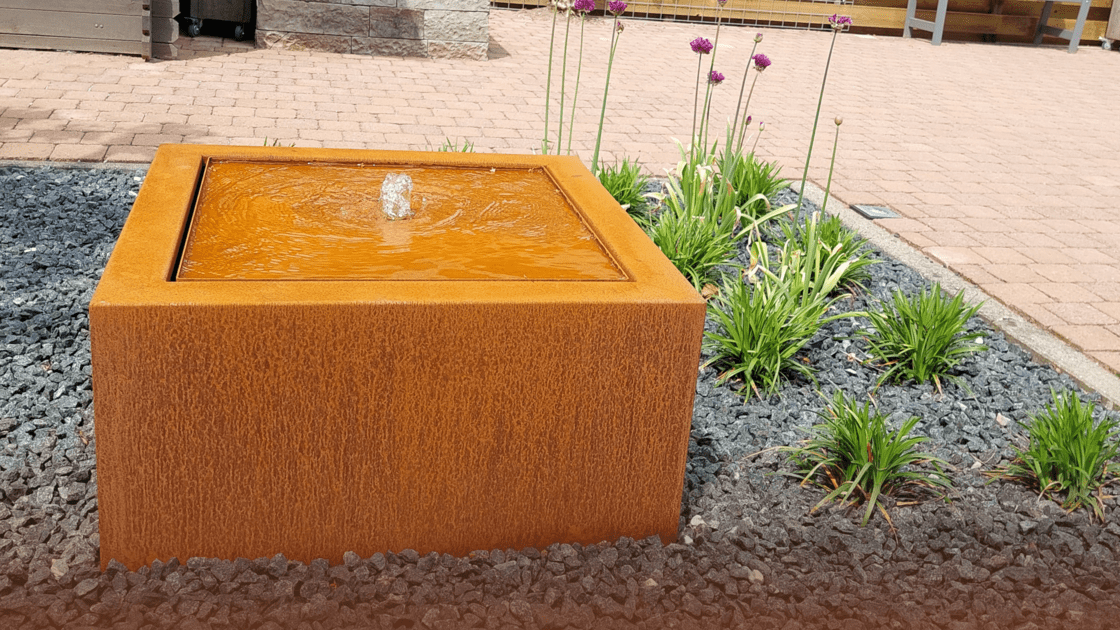
Water bowls and water tables are always underwater, as that is their intended purpose. But can constant immersion in water also cause problems here?
For corten steel water tables, prolonged exposure to water can affect how the rust layer forms. Underwater, a denser, additional rust layer often forms beneath the existing layer. This can result in slight differences in color or texture, making the surface appear less uniform.
A practical point of attention is the maintenance of the drainage holes: ensure they do not get clogged so that water can circulate well and stagnant water is avoided. Stagnant water can accelerate the process of layering rust and can cause minor flaking in the long run.

Conclusion
Corten steel does well against water. However, if it remains underwater all the time, an additional rust layer can develop. The material cannot rust through. It is important to ensure proper drainage and the right maintenance of corten steel products in your garden. This way, you can continue to enjoy the durability and beautiful appearance of corten steel in your outdoor space.